

Article: What is Luminox CARBONOX?
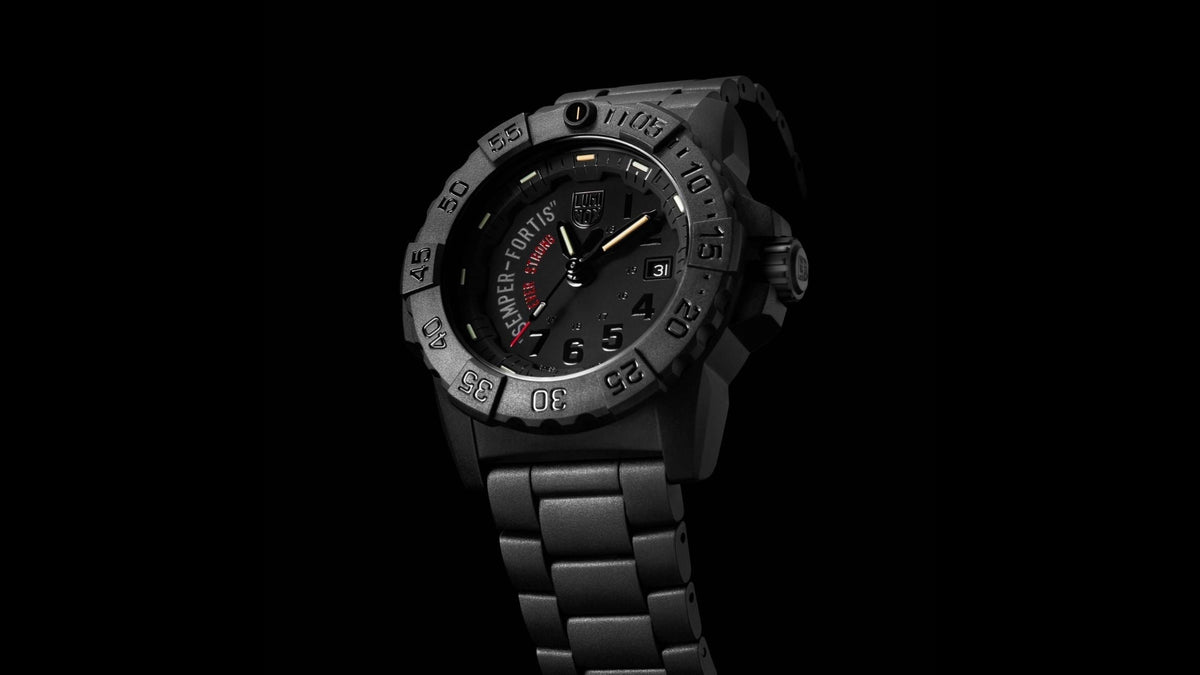
What is Luminox CARBONOX?
Luminox watches are often recognised for their visibility, military links and rugged case designs, but one of the most important parts of the brand’s identity is the material used across many of its watches: CARBONOX.
CARBONOX is Luminox’s carbon compound material. It is used to create watch cases, bezels, case backs and, on some models, straps or bracelets. The purpose is straightforward: to make watches that feel light on the wrist while still offering the strength, resistance and practical qualities expected from a tool-focused brand.
That matters because many Luminox watches are not designed to feel delicate. Collections such as Navy SEAL, Pacific Diver and Bear Grylls are built around everyday utility, outdoor use, visibility and durability. A heavy stainless steel case can work well for some watches, but it is not always the best answer for a larger tactical or sports watch. CARBONOX gives Luminox another route.
It allows the brand to create larger, more capable-looking watches that remain surprisingly wearable. It also gives many Luminox watches their familiar matte black appearance, which has become part of the brand’s design language. This guide explains what CARBONOX is, how it differs from CARBONOX+, why Luminox uses it, and what customers should know before choosing a CARBONOX watch.

What is CARBONOX?
CARBONOX is a carbon-based compound developed and used by Luminox for lightweight watch construction. Rather than being a traditional metal such as stainless steel or titanium, CARBONOX is a non-metallic carbon compound. Luminox uses it because it is light, rigid, durable and suited to watches that are designed to be worn in more active environments. The main benefit for the wearer is weight.
A CARBONOX watch can have a larger case size without feeling as heavy as an equivalent watch made fully from stainless steel. This is particularly useful in Luminox’s larger tool-watch designs, where case presence and practical legibility are important. A 44mm or 45mm watch in steel can feel substantial. In CARBONOX, the same style of watch can feel much easier to wear for longer periods.
That is one of the reasons the material makes sense for Luminox. The brand’s watches are often built around use rather than formality. They need to feel secure, readable and durable, but they should not become tiring on the wrist. CARBONOX helps balance those requirements.

Why does Luminox use CARBONOX?
Luminox uses CARBONOX because it supports several of the qualities people expect from the brand. The most obvious is lightness. CARBONOX is designed to reduce weight, which can make a big difference on watches with larger cases, thick bezels or rugged designs. This is especially relevant for outdoor, tactical and dive-inspired watches, where the case often needs to feel protective without becoming uncomfortable.
The second reason is durability. CARBONOX is rigid and resistant to impact, scratches, chemicals, temperature changes and weather exposure. That does not mean the material is indestructible, and it should not be described that way. But it does mean CARBONOX is designed for more demanding use than a purely dress-focused case material.
The third reason is comfort. Because CARBONOX is non-metallic and anti-allergenic, it can be a useful option for customers who prefer a watch that does not have the same feel as steel against the skin. It is also less affected by temperature in day-to-day wear. A steel watch can feel cold when first put on in winter or warm after sitting in direct sun. CARBONOX is less likely to create that same sensation.
The fourth reason is design. CARBONOX gives many Luminox watches their matte black finish. That finish is not only aesthetic. It reinforces the practical, low-reflection, tool-watch character that runs through much of the Luminox range.
In simple terms, CARBONOX helps Luminox watches feel lighter, more technical and more purpose-built.

What is CARBONOX+?
CARBONOX+ is a higher-performance version of Luminox’s carbon compound material. The key difference is the composition. CARBONOX+ uses a long-bar carbon compound with carbon fibres making up a significant proportion of the material. This gives it a different structure and appearance from standard CARBONOX.
For the wearer, CARBONOX+ is designed to offer additional strength and a more distinctive look. Luminox describes it as having greater tensile strength than standard CARBONOX and lower water absorption. It also usually has a more visible carbon-fibre pattern and a grey-toned appearance, rather than the matte black finish associated with standard CARBONOX. This means the choice between CARBONOX and CARBONOX+ is not only about performance. It can also affect how the watch looks.
Standard CARBONOX is usually the better fit for the darker, tactical Luminox style. CARBONOX+ often feels more technical visually, because the carbon pattern is more apparent on the case. Both materials sit within the same broader idea: reducing weight while improving the practical qualities of the watch case.

Is Luminox CARBONOX the same as carbon fibre?
Not exactly. When many people hear “carbon”, they think of visible woven carbon fibre, often seen in motorsport, cycling or high-performance equipment. CARBONOX is not simply a decorative carbon-fibre surface placed on a watch. It is a carbon compound material used in the structure of the watch case or components.
Standard CARBONOX is based on carbon powder in different proportions depending on the model. CARBONOX+ uses carbon fibres in the compound, which is why it can show a more visible carbon pattern. So, the better way to describe it is: CARBONOX is a carbon compound material. CARBONOX+ is a carbon-fibre-reinforced version of that material. That wording is more accurate than simply calling every CARBONOX watch a “carbon fibre watch”.

How does CARBONOX feel on the wrist?
The first thing most people notice is the weight.CARBONOX watches are often much lighter than their size suggests. This can be surprising, especially if the watch has a large case, thick bezel or strong sports-watch shape. That lightness can make the watch easier to wear for longer periods. It can also make larger Luminox models feel more practical than the measurements might suggest on paper.
The second thing is the temperature feel. Because CARBONOX is non-metallic, it does not usually feel cold in the same way as steel when first placed on the wrist. It also does not heat up in the same way under warm conditions. For outdoor watches, this is a practical benefit rather than just a technical point.
The third thing is the surface finish. CARBONOX usually gives a matte, slightly technical feel rather than the polished or brushed feel of metal. This suits Luminox because many of its watches are not trying to look formal. They are built around visibility, grip, function and durability. A CARBONOX watch will not feel like a steel bracelet watch, and it is not meant to. It is designed to feel lighter, more practical and more utility-led.

CARBONOX vs stainless steel
CARBONOX and stainless steel are very different case materials. Stainless steel is widely used in watchmaking because it is strong, durable and familiar. It can be brushed, polished, shaped and finished in many ways. It also gives a watch a more traditional weight and feel. CARBONOX is lighter and more technical. It does not have the same cold, solid feel as steel, and it is not chosen for polished finishing. Its value is in weight reduction, resistance and comfort.
A stainless steel Luminox may feel more traditional and substantial. A CARBONOX Luminox may feel lighter, more tactical and easier to wear in a larger case size. Neither material is automatically better. The better choice depends on what the customer wants from the watch.
If someone likes the weight and finish of metal, stainless steel may suit them better. If someone wants a rugged Luminox that feels lighter and more practical for long wear, CARBONOX makes sense.

CARBONOX vs titanium
Titanium is another lightweight material used in watchmaking, so it is often compared with CARBONOX. Titanium is a metal. It is lighter than stainless steel, naturally corrosion-resistant and often used in tool watches, dive watches and sports watches. It still feels metallic, but with less weight than steel.
CARBONOX is different because it is non-metallic. It is lighter again, and it gives the watch a more matte, technical character. Titanium often suits customers who want a premium lightweight metal. CARBONOX suits customers who want a more rugged, composite-material feel and a design that connects closely with Luminox’s tactical identity. Again, this is not about one material being universally better. It is about the kind of watch being made.

Does CARBONOX scratch?
Luminox describes CARBONOX as scratch resistant, but that should not be confused with scratch proof. This is an important distinction for customers.
Scratch resistant means the material is designed to hold up better against everyday marks and surface wear than some alternatives. It does not mean the watch cannot be marked, damaged or worn over time. A CARBONOX watch is still a watch. It should still be looked after properly. Hard impacts, rough surfaces and careless use can still leave marks. The useful point is that CARBONOX is designed for active wear and practical use. It is not a delicate material chosen mainly for appearance.

Is CARBONOX waterproof?
CARBONOX itself is weather resistant and has strong resistance to moisture-related conditions, but water resistance on a watch is not decided by the case material alone. This is important. A watch’s water resistance depends on the full construction: case design, case back, crystal, gaskets, crown, pushers if present, and how the watch has been tested and maintained.
Many Luminox watches with CARBONOX cases have strong water resistance ratings, especially in Navy SEAL and dive-inspired collections. But customers should always check the specific model rather than assume all CARBONOX watches have the same rating. The material helps support a practical case design, but it does not replace the actual water-resistance specification.

Which Luminox watches use CARBONOX?
CARBONOX appears across several Luminox collections, particularly in watches built around outdoor, tactical, military-inspired or dive-inspired use. It is commonly associated with Navy SEAL models, where lightness, durability and visibility are central to the design. It also appears in parts of the Bear Grylls range and other tool-focused Luminox collections.
The material works especially well in these areas because the watches often have larger cases, protective bezels and a stronger wrist presence. CARBONOX helps keep those designs wearable. It also fits the brand visually. A matte black CARBONOX case looks at home on a Luminox watch. It supports the practical, low-glare design language that has become closely linked with the brand.

Why CARBONOX matters to Luminox
CARBONOX matters because it is one of the details that separates Luminox from more conventional sports-watch brands. Many watch brands use stainless steel as the default. Luminox does use steel in some models, but CARBONOX gives the brand a more specific identity. It helps explain why many Luminox watches feel lighter than expected, why they often have a matte black appearance, and why the brand can make larger watches that still feel practical to wear.
It also fits the way Luminox talks about performance. The brand is not built around traditional dress-watch finishing. It is built around visibility, utility and durability. CARBONOX supports that position because it is a functional material with clear customer benefits. That is the main point. CARBONOX is not just there to sound technical on a specification sheet. It changes how the watch wears.

Should you buy a CARBONOX Luminox?
A CARBONOX Luminox makes sense if you want a watch that feels lightweight, practical and built around active use. It is a good fit if you like larger watch designs but do not want the weight of steel. It also suits customers who prefer a matte, tactical look rather than a polished or traditional metal finish.
It may be less suitable if you specifically want the weight, shine or bracelet feel of stainless steel. CARBONOX has its own character, and that character is more technical than traditional.

